OpenCart 4.x
Extensions for OpenCart, documented in full
Kyvero builds extensions for OpenCart 4.x. Every one ships with its source, carries no remote licence check, and is supported by the developers who wrote it.
Extensions
What we ship
Every extension we ship for OpenCart 4.x has its own page here and its own documentation. Each does one job, and the documentation says how far that job goes.
Import/export
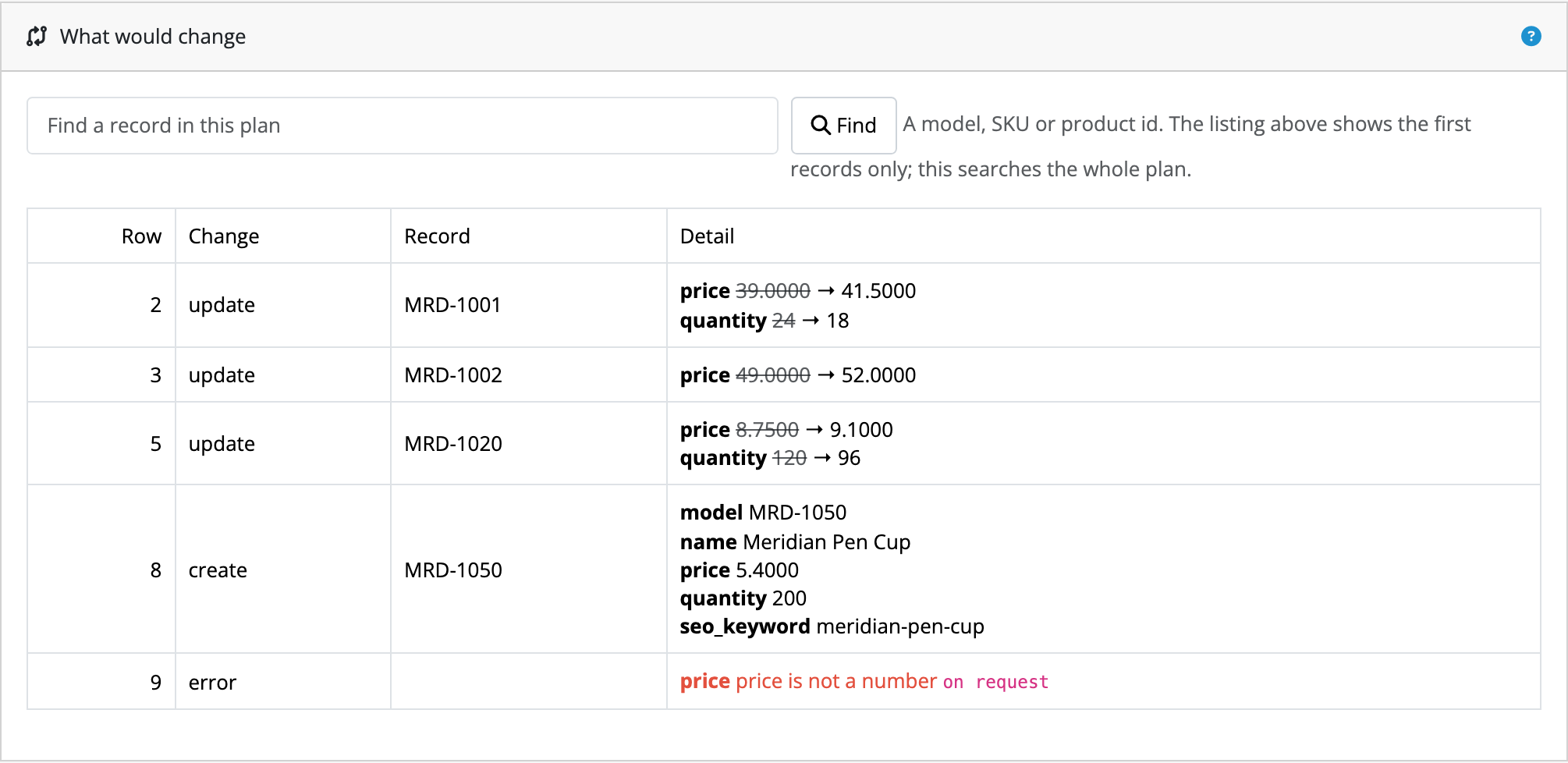
Bulk imports for OpenCart that show you every change before they make it, and can be rolled back afterwards.
What it does OpenCart 4.xDelivery Date
A delivery day and time window the customer picks at checkout, from the days you can actually do, with a cap per window and the day’s work on one printable sheet.
What it does OpenCart 4.xBack In Stock
Tells guests when an out-of-stock product or size is available again, with confirmed opt-in and no account needed. It also turns the waiting list into a per-variant demand report.
What it does OpenCart 4.xReturns Portal
A returns portal a guest can use: they look up their order, pick the lines they are sending back, see an estimated refund worked out from that order’s own rows, and print an RMA slip. You accept or refuse line by line.
What it does OpenCart 4.xReview Requests
Asks every customer for a review once their order has arrived, through a link that needs no account, and marks what comes back as a verified purchase.
What it does OpenCart 4.xPre-Order
Sells what has not arrived yet (a product or a single option value, with an expected date) and either charges in full at checkout or emails a payment link once the stock lands.
What it does OpenCart 4.xProduct Configurator
Conditional options on top of OpenCart’s own product options: rules that show, hide or require an option (or a single value of it) as a customer configures a product, instantly on the page and enforced again on the server.
What it does OpenCart 4.xProduct Search
Finds more of the right products: every word has to match, brands and departments count, synonyms and misspellings are forgiven, and you pin what leads. It also reports what shoppers typed and what came back empty.
What it does OpenCart 4.xProduct Feed
Google, Meta and Microsoft Advertising feeds generated from your catalogue on a schedule. Each channel’s own fields are set against your own values, and what every field will produce is shown against your own products before you save.
What it does OpenCart 4.xWishlist
One wishlist per shopper, guests included, that survives the browser closing, with a share link, bulk add-to-cart, and price-drop and back-in-stock alerts for customers.
What it does OpenCart 4.xProduct Bundles
Sell a starter kit, a gift set or a camera-plus-lens package as one thing: a bundle made of existing products, priced as a whole, that decrements each component’s stock when it sells.
What it does OpenCart 4.xSEO Suite Pro
Five SEO jobs one OpenCart 4 store needs and does not have, in one archive: URL keywords and meta text generated across a catalogue, the markup that makes a link unfurl and a result show a price, alt text, an XML sitemap with robots rules, and redirects for the URLs a catalogue change left behind.
What it does OpenCart 4.xProfitability Copilot
Profit per order line and store-wide, recorded at the moment an order becomes real: product cost, payment fees, fulfilment, discounts and returns, against recurring operating expenses.
What it does OpenCart 4.xGift Cards
Gift card expiry, a balance page the holder can check without an account, and one figure saying what your store still owes on cards nobody has spent.
What it does OpenCart 4.xB2B Pricing
Wholesale price lists for OpenCart: a named set of prices assigned to a customer group or to one named customer, with quantity breaks and case quantities, charged in the cart at the price the product page showed.
What it does OpenCart 4.xAbandoned Cart Recovery
Email the shoppers who reached your OpenCart checkout and walked away, with a link that puts their cart back: one plain reminder by default, and a three-email sequence with a coupon only when you choose it.
What it does OpenCart 4.xLoyalty
A points programme on OpenCart’s own reward ledger: earn a percentage of what customers spend, spend points on the cart at a rate you set, and let dormant balances expire only after a warning.
What it doesGuides
Before any of that, the problem
Written about things stock OpenCart does or does not do, for a merchant deciding what to do about it rather than for one who has already decided to buy something.
How to bulk edit OpenCart products without breaking your catalogue
Four ways to change many products at once in OpenCart 4, what each one costs you when it goes wrong, and how to get a change you can read before it runs.
Read the guideSetting up a Google Shopping feed for OpenCart
What Merchant Center requires, which of those fields an OpenCart store does not have by default, and how to see a rejection before Google sends it.
Read the guideWhy OpenCart search returns nothing, and what to do about it
Stock OpenCart search misses brand names, category names, synonyms and every typo. Here is what it matches, and what each of the fixes costs you.
Read the guideHow we work
What you can check before you buy
You get the source
An extension is PHP on your own server: readable, not obfuscated, and with no remote licence check to fail. Your own copy is yours to modify and to keep backed up.
Documentation that states its limits
Every extension has a limits and guarantees page writing down where it stops and what it declines to touch. It is the page worth reading before you trust it with a live catalogue.
Support from the people who wrote it
Two official routes, both arriving in the same place: the support portal, and the support address. A developer answers, usually the one who wrote the extension.
An API that states what will not change
One HTTP API convention, and a page listing every extension that answers on it and the version it answers on. The promise attached to it says what will not change, and for how long: two years after a version is replaced.
Translation published, not claimed
One translation convention, and a page publishing which of our strings a named native speaker has read, per extension and per language, folded out of the sign-off records themselves. Anything unreviewed ships as English, never as a blank or a raw identifier.
A security verdict for every extension
One published list of numbered security controls, and a page per extension saying what the check found against every one of them, including the controls it does not meet, each named with the file and the line. The list, the rules behind it and the source they read are all in the same repository.
Settings written down, refusals included
One settings convention, and a page per extension listing every setting it has (what it does, where it applies, and what it starts at) alongside what the extension fixes on purpose and why. The build regenerates both from the source and fails when either has gone stale.
One diagnostic file, downloadable from your admin
One diagnostic convention across every extension, writing to a single file your own admin downloads in one click. It records what each extension did, and what it refused to do and why, naming records by their id rather than by anyone’s details. It never leaves your server. If we need more, you switch on detailed logging for the one extension, and it switches itself off after two days.
What an extension adds to a page request
Every extension is measured twice on the same nineteen pages of a stock store, once without it installed and once with it, and the difference is published per page, beside what that page already cost. Six of the seventeen add no queries to any of the twelve pages a shopper opens, and the row that pays most with all seventeen installed at once is an admin form rather than anything a shopper opens.